
How Elementary Math Tutoring Transforms Young Learners
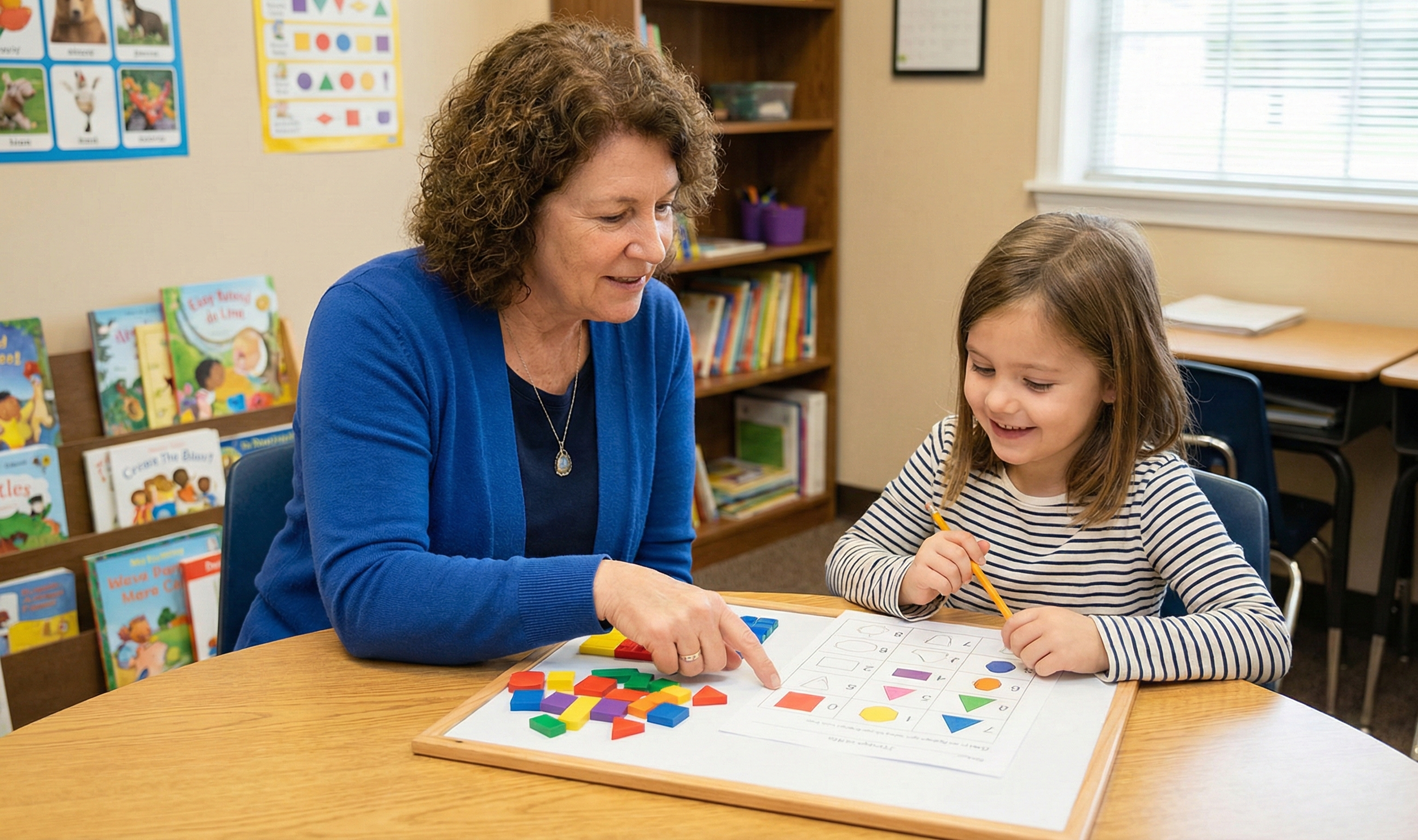
Elementary math tutoring transforms young learners through high-dosage, structured sessions at least three times weekly in small groups of 1-3 students. You'll see gains equivalent to four extra months of learning when certified teachers or trained paraprofessionals lead in-school sessions. Early intervention reduces future math difficulties by up to 50% and helps address math anxiety. The combination of personalized attention and consistent scheduling builds strong foundations for long-term academic success. Learn how these proven approaches can benefit your students.
Key Takeaways
High-dosage tutoring (3+ sessions weekly) produces gains equivalent to four additional months of math learning.
Small group formats with 1-3 students per tutor consistently yield stronger learning outcomes than larger groups.
Early math tutoring reduces the likelihood of difficulties with advanced topics by up to 50% in middle school.
In-school tutoring sessions during regular hours show approximately double the impact compared to after-school programs.
Structured tutoring that balances direct instruction with personalized attention builds stronger mathematical foundations in young learners.
What Makes Elementary Math Tutoring Effective? Research and Results
Why do some elementary math tutoring programs dramatically outperform others? Research points to specific tutoring strategies that consistently deliver stronger learning outcomes.
Programs offering high-dosage tutoring, more than three days weekly or at least 50 hours over 36 weeks—show remarkable results, producing gains equivalent to four extra months of learning. For maximum effectiveness, you'll want tutoring that maintains small group formats of no more than three students per tutor, with one-on-one or two-on-one arrangements proving most beneficial for young learners. This approach to tutoring has been found to generate learning equivalent to 3-15 additional months of schooling when properly implemented.
The qualifications of tutors matter greatly; certified teachers and trained paraprofessionals consistently outperform volunteer-led programs. Building strong tutor-student relationships is essential for effective elementary math tutoring and significantly improves academic outcomes.
Additionally, scheduling sessions during school hours rather than after school yields substantially better results, with research showing in-school tutoring produces more consistent and considerable math achievement gains.
Is your child struggling with Math? A-List Tutoring offers personalized instruction that makes even the most complex topics easier to grasp. Sessions are available in person in Los Angeles or online, so support is always within reach. Contact us to schedule your first session.
How Elementary Math Tutoring Prevents Future Math Difficulties

Elementary math tutoring provides a critical defense against future mathematical struggles, particularly when implemented during a child's early academic years. Research shows that these preventive strategies yield the strongest effect sizes in earlier grades, reducing the likelihood of difficulties in advanced topics by up to 50% in middle school.
Your child's foundational skills grow substantially through personalized tutoring, with studies showing effect sizes of 1.34 when combined with validated instruction. This targeted approach can double or triple annual math learning, preventing academic lag.
As evidenced by initiatives like Project Excite, these early investments in education yield substantial long-term benefits for students throughout their academic careers. Additionally, our tutoring program focuses on building strong foundational skills, ensuring that students gain confidence in their math abilities.
With just 8.4 hours of tutoring needed for an additional month of math learning, you're investing in both immediate results and long-term benefits. High-impact tutoring, delivered more than three days per week, creates learning gains that translate into improved financial literacy and problem-solving abilities throughout life. Early intervention tutoring also helps identify and address math anxiety that approximately 30% of students experience at high levels. This approach fosters personalized education tailored to individual needs, ensuring that students not only learn but thrive in their mathematical journey.
The Optimal Structure: Small Groups and Consistent Sessions
While building a strong foundation in mathematics is essential, the structure of your child's tutoring experience greatly impacts their success. Research shows small group dynamics (1-to-small-group instruction) yield stronger results than whole-class teaching, with effect sizes of 0.30 SD in grades K-5. Your child will benefit from personalized attention while still developing peer collaboration skills. Additionally, math tutoring emphasizes understanding principles rather than memorization, which further enhances learning outcomes.
Consistent scheduling is equally important. Programs meeting three times weekly show sustained math competency gains, with 60% of positive effects persisting 3.5 years later. The intervention provides significant benefits to students across all ability levels, including personalized instruction tailored to specific learning styles and academic needs.
Weekly assessments help track your child's progress, ensuring tutoring adapts to their needs. For best results, look for tutoring programs that maintain high completion rates (93% in successful programs) and balance direct instruction with flexible grouping based on skill proficiency. This structured approach accelerates learning and helps close opportunity gaps.
When to Schedule Tutoring: School Day vs. After-School Approaches
When it comes to maximizing your child's math learning, the timing of tutoring sessions plays a crucial role in their effectiveness. Research clearly shows that in-school tutoring during regular hours yields stronger results than after-school alternatives.
School hour benefits include dramatically higher attendance rates, with students receiving the full intended dosage, at least three 30-minute sessions weekly. This approach has reversed pandemic math learning losses in many cases.
The integration into the school day removes access barriers, promoting equity among all learners. In fact, studies show that in-school tutoring programs have roughly double the impact on student learning compared to afterschool programs. Research indicates that math tutoring is more effective for students in grades 2-5 compared to other subject areas. Additionally, the personalized instruction provided during school hours helps address specific weaknesses in math subjects, making it an economical choice for families looking for budget-friendly support. This method also aligns with the principles of effective study habits, enhancing overall academic performance.
After school limitations are significant. Only 14% of fourth graders receive weekly math tutoring outside school hours, down from pre-pandemic levels. Programs scheduled after dismissal face persistent attendance challenges, with students receiving just a fraction of targeted instruction time, sometimes as little as 9 hours versus a 68-hour goal.
What Elementary Math Tutoring Sessions Actually Cover
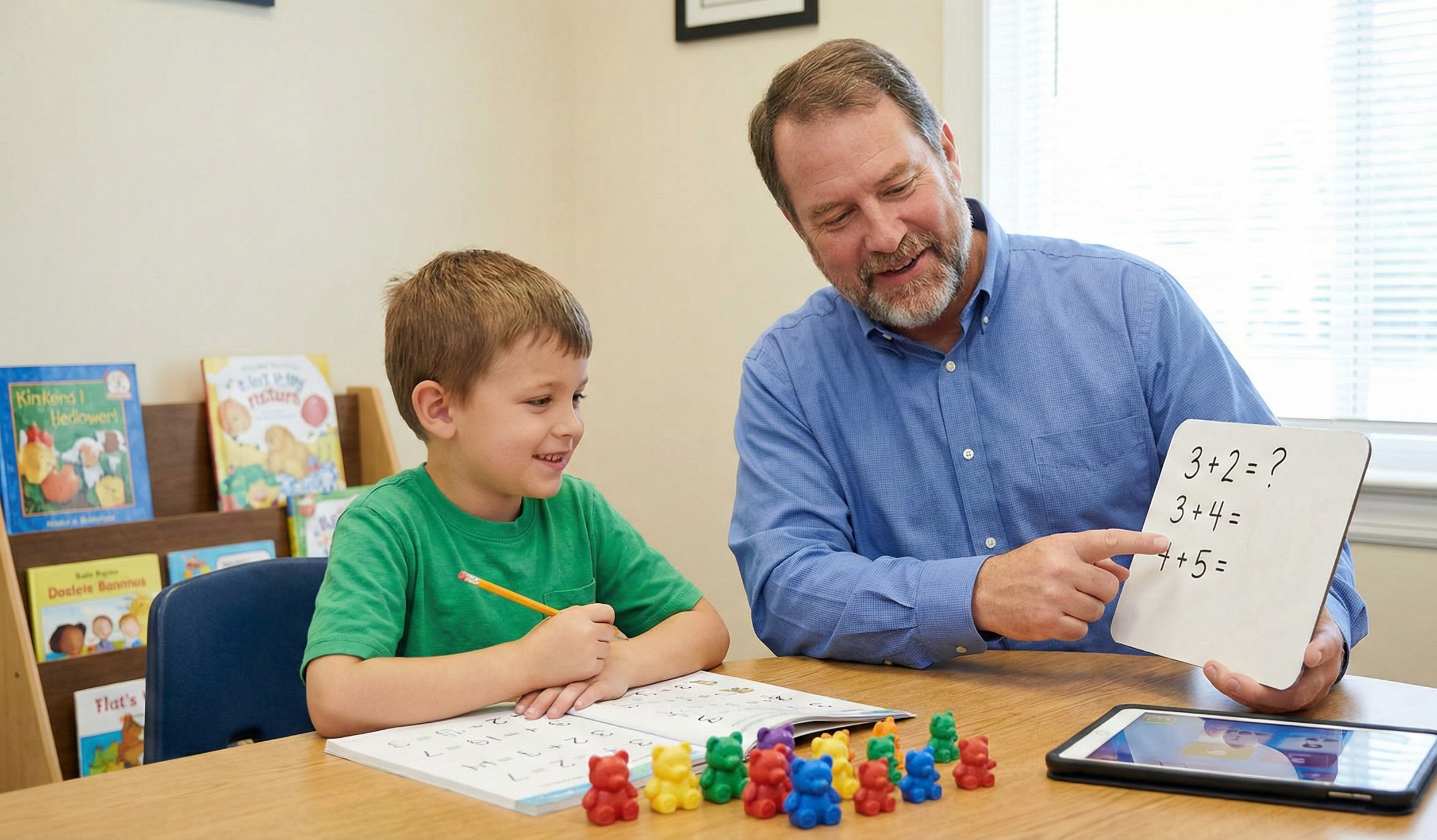
Effective math tutoring sessions cover five essential skill areas that build your child's mathematical foundation from the ground up. Your child's tutor will focus on core skills like addition, subtraction, multiplication, and fraction operations while implementing tutoring techniques that match their learning style.
Sessions typically blend geometry and measurement activities with real-world applications, ensuring classroom integration of concepts like surface area and spatial reasoning. Tutors emphasize the importance of real-life applications of mathematical concepts to make learning more relevant and engaging. Additionally, pre-calculus tutoring provides a robust foundation that prepares students for advanced mathematical studies.
Data interpretation and probability exercises develop analytical thinking, while pattern recognition builds early algebraic thinking.
Through individualized learning plans, tutors address your child's specific needs, whether it's mastering multiplication facts or solving word problems. With support from expert tutors available in various educational levels, your child receives comprehensive mathematical guidance.
Parental involvement improves progress tracking, allowing you to monitor improvements in both fundamental skills and problem-solving strategies throughout their mathematical path.
Who Should Provide Math Tutoring? Training Requirements for Success
Now that you understand what math tutoring covers, you'll want to guarantee your child works with a qualified instructor who can effectively deliver these concepts.
Most reputable tutors hold at least a high school diploma, though many possess bachelor's degrees, especially for advanced instruction. Professional certification pathways through organizations like the National Tutoring Association or College Reading and Learning Association validate a tutor's competency. These credentials typically require documented tutoring experience ranging from 10 hours for basic certification to 500 hours for master-level status.
When selecting a math tutor, look for someone with demonstrated subject knowledge, strong communication skills, and patience. Algebra tutoring offers personalized learning plans that can significantly benefit your child’s understanding of math.
The best instructors can adapt their teaching approach to your child's learning style while maintaining thorough understanding of both mathematical concepts and effective teaching methods.
How Elementary Math Tutoring Improves Attendance and Engagement

Math tutoring delivers unexpected benefits beyond academic improvement, including significant positive effects on school attendance patterns.
Elementary students experience a 1.2 percentage point reduction in absenteeism on tutoring days, contributing to your classroom's overall engagement.
When implementing attendance strategies, consider that in-school tutoring during regular hours yields the strongest results.
You'll see even better outcomes by combining small group sessions (1:1 or 1:2 ratios) with frequent meetings at least three times weekly.
These engagement techniques are particularly effective for students with a history of chronic absences, who gain up to five additional instructional days annually.
The benefits compound, students who show up more consistently also demonstrate greater academic progress, creating a positive cycle of learning and participation.
Measuring Success: Expected Learning Gains From Math Tutoring Programs
When evaluating the impact of elementary math tutoring programs, you'll find consistent and measurable learning gains across multiple studies. High-dosage tutoring delivers approximately four months of extra learning for struggling students, with effect sizes averaging 0.37 standard deviations, moving children from the 50th to 66th percentile in just one year.
For ideal progress tracking and learning benchmarks, consider these key measurements:
Elementary students typically gain a quarter to two-thirds of a school year in math knowledge through structured tutoring programs.
Programs with sessions at least three times weekly for 30 minutes produce the most significant improvements.
Math tutoring requires about 13.7 hours of instruction to increase achievement by one month, making it more efficient than literacy interventions.
Early grades show the strongest results, particularly for students from low-income families.
How Elementary Math Tutoring Transforms Young Learners
You'll find elementary math tutoring is an investment that pays dividends throughout a child's academic path. By implementing structured sessions with qualified tutors, you're not just improving math skills, you're building confidence, augmenting attendance, and preventing future learning gaps. Whether during school hours or after classes, consistent tutoring in small groups creates measurable gains. Consider implementing this approach to transform your young learners' mathematical foundation.