
Why Students Lose Confidence in Math

You lose math confidence when a single bad moment, a failed test, a teacher's offhand comment, or a concept that won't click trigger stories that you're just not a math person. From there, small knowledge gaps quietly compound, anxiety consumes your focus, and avoidance widens the problem further. What starts as one shaky lesson can reshape how you see your entire ability. The sections ahead break down exactly how this happens and what actually fixes it.
Key Takeaways
Math confidence often collapses between 4th and 7th grade when difficulty spikes and early embarrassments create lasting negative self-narratives.
Missing foundational concepts creates compounding gaps, making advanced topics harder and reinforcing the belief that students simply "can't do math."
Math anxiety consumes working memory, reducing problem-solving capacity and triggering avoidance behaviors that widen knowledge gaps over time.
Rote memorization without conceptual understanding causes confidence to collapse when memory fails and students cannot rebuild their reasoning.
Teacher anxiety, parental gender bias, and fixed mindset beliefs signal to students that mathematical ability is innate, not learnable.
The Moment Math Confidence Starts to Crack
Math confidence doesn't erode gradually for most students, it often breaks at a single, identifiable moment. For many, this happens between 4th and 7th grade, when math shifts from familiar to demanding. A teacher embarrassing you in front of class, missing a critical school year, or suddenly facing peer comparison in an advanced class can each trigger a sharp confidence drop.
In Los Angeles, where only 31% of students met math standards in 2021, these moments are often compounded by systemic gaps in instruction and support, making early setbacks more consequential for many learners and highlighting the need for personalized instruction. Tutoring that offers tailored programs can help address those gaps by meeting each student at their level.
These moments don't just sting temporarily. They become the story you start telling yourself about your ability. Once that narrative forms, test pressure amplifies it. You walk into exams already convinced you'll fail, which makes mistakes feel like proof rather than process.
The incident itself may be small, but its psychological weight can redirect how you see yourself as a math learner for years. Rebuilding that confidence often requires productive struggle with problems that challenge students to experiment, fail, and apply their knowledge in new ways. Math ability is not innate, it is a skill built through consistent effort and practice, meaning no single moment has the power to permanently determine what you are capable of achieving.
How Small Knowledge Gaps Quietly Snowball
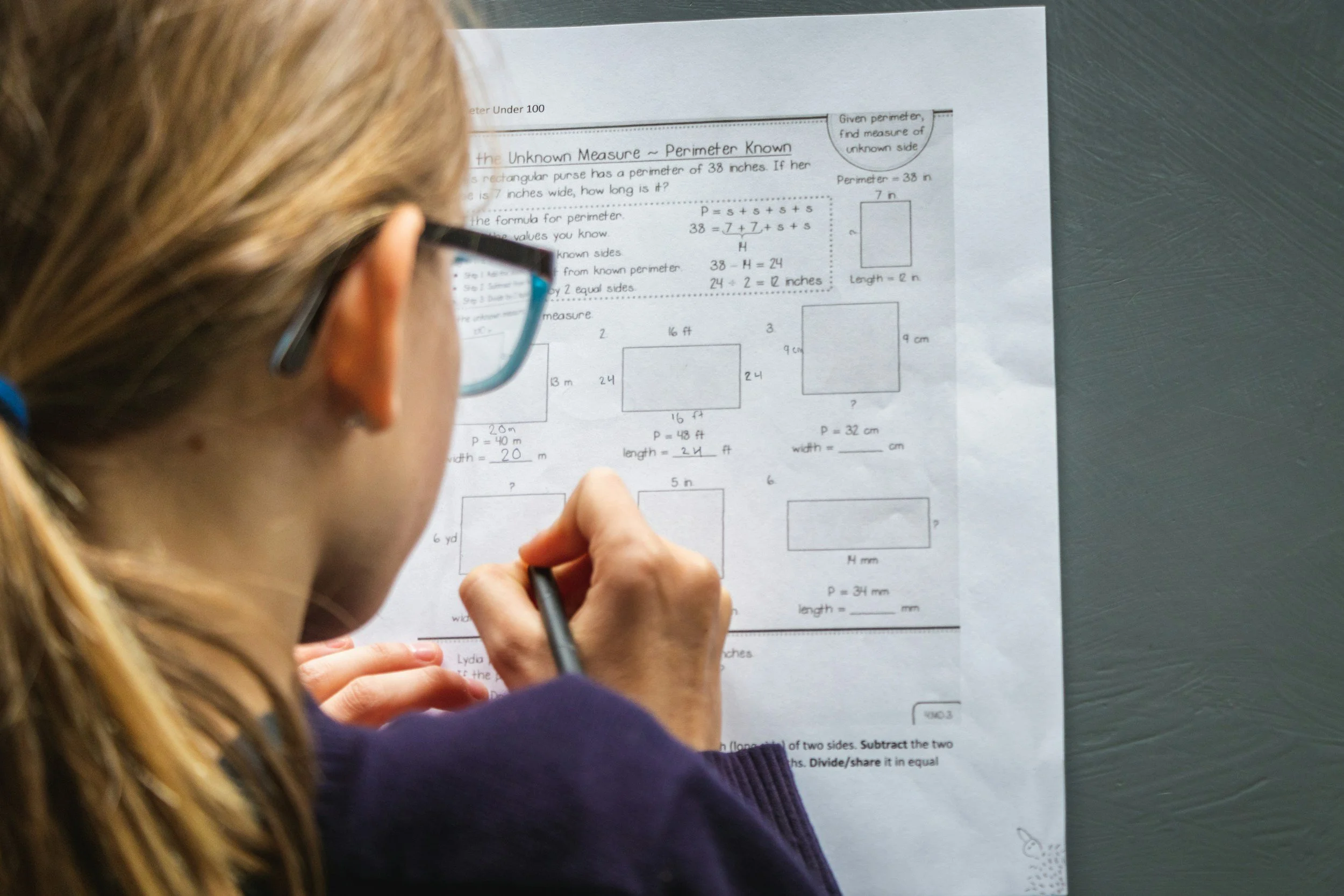
That single cracking moment rarely works alone, it usually lands on ground that's already been weakening. Early gaps in foundational skills don't stay small. They grow quietly through skill compounding, where each unmastered concept makes the next one harder to grasp.
High-dosage tutoring delivered in small groups can help reverse this trend by accelerating mastery of missed concepts in a sustained way, especially when implemented during the school day for maximum reach and attendance in small groups. Local tutoring programs in Sherman Oaks have shown measurable gains in math and reading proficiency, demonstrating how targeted support can close gaps efficiently in math proficiency.
Missing a fraction concept in third grade doesn't just hurt fraction tests. It follows you into algebra, geometry, and probability. By the time you're sitting in a sixth-grade classroom struggling, the real problem started years earlier.
Research shows students entering with weaker foundations fall further behind over time, not at the same pace. Higher-performing peers grow faster while lower-performing students slow down. That's not coincidence, it's math's cumulative structure working against anyone who missed earlier building blocks. Low-performing students suffered the greatest and most lasting losses following the disruptions of recent years, a pattern confirmed by both NAEP and TIMSS data.
These gaps don't always look the same because students may struggle with content, skill, or confidence gaps, each requiring a different approach to diagnose and address effectively.

Does you need help with Math?
We offer personalized Elementary Math Tutoring in person and online. We can help!
Why Memorizing Rules Without Meaning Backfires
Gaps in foundational knowledge create fertile ground for another confidence killer: learning rules without understanding why they work. Rote memorization and surface learning create a false sense of security. You remember the formula long enough to pass the test, then forget it completely afterward.
Online tutoring often fixes these gaps by offering targeted reviews of basics and remedial practice foundational skills. Tutors who document student improvement with clear success metrics can reassure families that remedial practice produces measurable gains.
Without understanding the logic behind a concept, you can't rebuild it when memory fails.
This backfires in three predictable ways:
Retention drops sharply within weeks because disconnected rules lack meaningful anchoring.
Transfer fails when problems change context or require creative reasoning.
New topics feel overwhelming because previous knowledge was never genuinely established.
Math stops feeling like a logical system and starts feeling like an endless list of arbitrary recipes. That's when confidence quietly collapses. Deriving formulas yourself leads to far stronger retention than memorizing them as isolated facts. True memorization requires practicing retrieval, not simply solving problems repeatedly, meaning students who only drill procedures never build the durable recall that genuine confidence depends on.
The Role Math Anxiety Plays in Student Performance

When math stops feeling manageable, anxiety often moves in to fill the gap and once it does, it doesn't just affect how students feel, it actively undermines how they perform. Research consistently shows a negative link between math anxiety and achievement, with effect sizes ranging from moderate to strong depending on grade level and context.
The mechanism is straightforward: cognitive interference kicks in when worries consume working memory, leaving fewer mental resources for actual problem-solving. You're spending mental energy managing fear rather than solving equations. Behavioral avoidance compounds the problem. You skip math electives, procrastinate on homework, and disengage in class with each choice quietly widening the knowledge gap. Over time, avoidance reinforces anxiety, creating a cycle that's harder to break the longer it continues. Notably, how anxiety is measured matters significantly. Studies using different questionnaires have reached different conclusions, suggesting that measurement type shapes whether a relationship between anxiety and performance even appears in the data.
Personalized instruction and one-on-one support can help students rebuild skills and confidence, reducing avoidance and improving outcomes for foundational math. Personalized, one-on-one tutoring focused on pre-algebra can especially help students regain confidence and mastery.
How Grades and Rankings Erode Intrinsic Motivation
Anxiety isn't the only force working against students in math, the grading systems designed to measure their progress can quietly undermine their desire to learn in the first place. Normative grading creates artificial scarcity around top scores, pushing you to compete against classmates rather than focus on mastering concepts. Our tutors help students refocus on understanding through personalized instruction that targets individual learning paces.
This autonomy suppression shifts your goal from genuine understanding to simply outperforming others.
Traditional grading harms your motivation in three key ways:
It redirects your focus from learning to earning scores
It fosters social comparison, insecurity, and resentment
It replaces intrinsic curiosity with performance-driven anxiety
Research shows pass/fail and narrative evaluation systems produce stronger intrinsic motivation than letter grades. When feedback becomes informational rather than controlling, you're more likely to engage deeply with challenging material. Yet a longitudinal study tracking elementary students across seven measurement occasions found only a weak association between grades and intrinsic motivation trajectories, suggesting the relationship is more complex than often assumed.
Self-determination theory identifies autonomy, competence, and relatedness as the three key elements that together foster the kind of intrinsic motivation grades alone consistently fail to provide. Evidence suggests that shifting the focus from grade-based incentives to student-driven learning and skill mastery produces deeper engagement and genuine academic thriving. Our Los Angeles tutors bring over 20 years of experience to support these shifts with one-on-one attention.
Fixed Mindset Beliefs That Keep Students Stuck

Beyond grading systems, there's another force shaping how you experience math: what you believe about your own ability. If you think math skill is an innate talent you either have or don't, you're carrying a fixed belief that actively works against you.
These fixed beliefs show up in predictable ways. You avoid asking questions, skip challenging problems, and give up quickly when things get hard. When you fail a quiz, you interpret it as proof you're not a "math person" rather than a signal to adjust your approach. You might also ignore feedback, fearing it'll confirm what you already suspect.
About half of students share this mindset, so you're not alone. But believing ability is unchangeable keeps you stuck before you've even really tried. This struggle hits harder for certain groups, as a fixed mindset is especially damaging for females in STEM and first-generation college students who already face added pressure to prove themselves.
Tutors with personalized learning plans can help shift students toward growth by targeting specific challenges and building confidence. A tailored approach with experienced tutors in Pre-Calculus tutoring can strengthen foundational skills and boost resilience.
How Parents and Teachers Shape Math Identity
The adults in your life shape how you see yourself as a math learner, often before you even step into a classroom. Parental biases about who's naturally "good at math" quietly influence your confidence and choices. A teacher's self concept around math can also create environments where anxiety spreads instead of curiosity.
Here's how this plays out:
Parents with gender-based expectations steer children away from math-related paths early.
Math-anxious teachers unconsciously signal that struggling means you don't belong in math.
Parental beliefs about innate ability discourage effort, making challenges feel permanent.
Recognizing these influences matters. When adults reframe math as learnable rather than inherited, you're more likely to stay engaged, take risks, and build lasting confidence. Personalized, one-on-one attention can help build foundational skills and reverse negative patterns. Tutors with strong subject expertise and familiarity with local curricula can provide targeted support that reinforces confidence.
What Students Actually Need to Rebuild Confidence in Math

Knowing what shapes your math identity is only part of the story, what actually changes it's a different matter. You need incremental success, which means breaking problems into smaller, achievable steps so you can build momentum without feeling overwhelmed.
Scaffolded learning provides initial guidance and gradually reduces support, helping you develop real independence over time. Our tutors emphasize one-on-one instruction to match each student's learning style and pace.
You also need your skill gaps addressed directly. Missing foundational knowledge creates barriers that compound quickly, so meeting you at your current level matters.
Regular, low-stakes practice builds fluency without the pressure of high-stakes testing. Safe environments where mistakes become learning opportunities, rather than failures, keep you engaged.
Finally, self-reflection tools help you track your own growth, making progress visible and your goals feel genuinely reachable.
Our tutors focus on proofs, coordinate geometry, and spatial reasoning to target those specific needs and build confidence through personalized sessions.
Why Students Lose Confidence in Math
Math confidence doesn't disappear overnight, it erodes through small gaps, unhelpful beliefs, and environments that reward performance over understanding. You can reverse that pattern. Start by addressing foundational gaps, shifting how you think about mistakes, and focusing on genuine understanding rather than memorized rules. Confidence follows competence, but it also follows the right support systems. Change the conditions, and you'll change how students experience math entirely.