
Why Students Struggle With Algebra
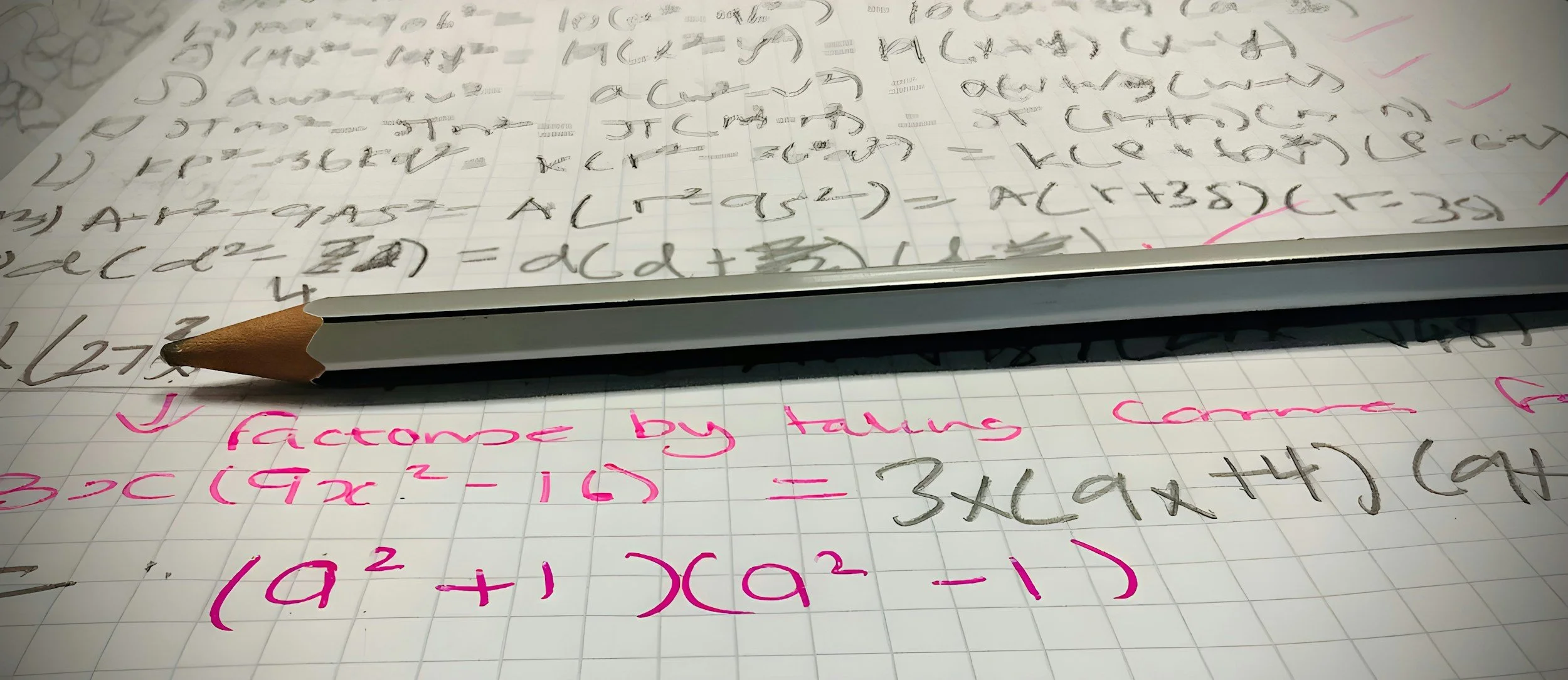
You struggle with algebra because earlier math gaps (fractions, negative numbers, decimals) that finally surface when abstract thinking becomes required. Variables confuse you when they've never been properly explained, and anxiety consumes the working memory you need to problem-solve. Most classroom instruction prioritizes memorizing steps over building real understanding, leaving you without a strong foundation. The good news is these struggles have clear causes and real solutions, which you'll uncover ahead.
Key Takeaways
Gaps in foundational math skills like fractions, negative numbers, and decimals make algebraic concepts significantly harder to grasp and apply.
Variables are frequently misunderstood as labels or multiplication signs rather than quantities, creating persistent conceptual confusion in algebra.
Instruction often prioritizes rote memorization and abstract procedures over meaningful, real-world context, leaving students without true understanding.
Math anxiety consumes working memory needed for problem-solving, triggering avoidance behaviors that further weaken algebraic skills over time.
Word problems add difficulty by requiring language interpretation, problem classification, and translation into symbols, overwhelming underprepared students.
Why So Many Students Struggle With Algebra
Algebra trips up more students than almost any other subject, and the reasons why aren't always obvious. When you move from working with concrete numbers to handling abstract variables, the mental shift feels sudden and disorienting. Algebra demands symbolic patience, meaning you must sit with unfamiliar expressions, resist rushing, and trust a logical process that doesn't always feel intuitive.
Beyond the abstract thinking challenge, gaps from earlier math concepts quietly resurface. Shaky understanding of fractions, negative numbers, or ratios can derail you before you even reach the harder material. Disruptions like COVID-19 schooling made these foundational gaps significantly worse for a generation of students who missed critical instruction during key developmental years. Personalized tutoring can target those specific gaps and rebuild core skills efficiently. Our tutors focus on foundational skills to restore confidence and competence.
Add in anxiety, inconsistent study habits, and teaching methods that don't match how you learn, and algebra becomes far more difficult than it needs to be. Research suggests that 20 to 30 percent of students experience math anxiety, a learned emotional response that can trigger mental blankness and physical symptoms precisely when clear thinking matters most. Understanding these barriers is your first step toward overcoming them.
The Basic Math Gaps That Make Algebra Feel Impossible
Before you can tackle algebra, certain foundational skills need to be solid, and for many students, they simply aren't. Fraction misconceptions are among the biggest culprits. If you struggle to add or divide fractions, equations like 1/2x = 3 become immediately overwhelming. Personalized instruction can target these gaps with customized tutoring that builds foundational mastery.
These gaps don't stay isolated, they spill into probability, geometry, and beyond. Research confirms that earlier deficits cascade into later challenges with geometry, algebra, and probability topics as students advance. Online options also make it easier for families to access targeted help when and where it's needed, reducing missed practice time and improving consistency with flexible scheduling.
Numerical fluency matters just as much. Weak number sense creates confusion around order of operations, negative numbers, and basic arithmetic, all of which algebra depends on heavily. Without confidence in multiplication and division, symbolic reasoning feels foreign rather than logical.
Decimals and percentages add another layer. If these concepts feel shaky, algebraic coefficients and abstract manipulation become considerably harder. The math pyramid is real and cracks at the base affect everything above. Early exposure to pattern recognition skills builds the groundwork for algebraic thinking, meaning students who miss this step often find variables and expressions far more difficult to grasp.
How Math Anxiety Hijacks Learning Before It Starts

Math anxiety isn't just nervousness, it's a cognitive disruption that actively interferes with learning before a single problem gets solved.
When you feel anxious, your working memory gets consumed by that anxiety, leaving fewer mental resources available for solving problems. Algebra demands abstract reasoning and multi-step thinking, so even moderate anxiety creates serious interference.
Small-group tutoring can help rebuild those capacities by providing focused, supportive practice that strengthens foundational skills and working memory 1-3 sessions weekly. Many successful programs pair small-group formats with tutors who have documented one-on-one experience to maximize individualized support.
This cognitive disruption often triggers behavioral avoidance, you skip problems, give up faster, or stop participating altogether. That avoidance creates a damaging cycle: less practice leads to weaker skills, which increases anxiety further, which drives more avoidance.
Research confirms that higher anxiety correlates with lower algebra performance. Recognizing this pattern early matters because anxiety doesn't just slow you down, it reshapes how you engage with math entirely. Students with more positive attitudes toward algebra tend to show stronger academic performance, reinforcing why emotional and cognitive factors must be addressed together.
Why Variables Confuse Students More Than They Should
Variables seem simple enough on the surface, a letter standing in for a number, but that simplicity is deceptive. Variable misinterpretation starts early and sticks hard.
Symbolic ambiguity makes this worse. Variables can be unknowns, inputs, outputs, or parameters depending on context, and nobody always explains that shift clearly. Research shows that students often hold multiple inconsistent interpretations of the same variable while working through a single problem.
You're also expected to distinguish coefficients from variables in expressions like 3x, where two completely different roles sit directly next to each other without obvious separation.
Unlike constants, variables act as placeholders for changing values, meaning an equation like x + y = 7 carries infinite valid solutions rather than a single fixed answer.
Building a strong foundation with personalized tutoring can help students learn these distinctions more reliably. Our tutors in Los Angeles have over 20 years of experience helping students overcome these exact confusions.
The Problem With How Algebra Is Usually Taught

Even when students grasp variables well enough to work with them, the way algebra gets taught often guarantees they won't go much further. Most classrooms prioritize rote memorization of formulas and step-by-step procedures over understanding why those steps work. You learn to follow a process, but nobody explains its purpose.
This focus on abstract procedures without real-world context leaves you practicing skills that feel disconnected from anything meaningful. Teachers often introduce rules first and applications second, if applications appear at all.
You rarely get the chance to uncover what algebra can actually do before being expected to master its mechanics.
The result is predictable. You can solve problems that look exactly like practiced examples, but struggle the moment anything changes slightly. Algebra shows up constantly in real life, from calculating travel time using distance and speed to scaling a recipe in the kitchen, yet classrooms rarely make that connection visible.
Concrete learning aids like drawings and physical manipulation can make abstract concepts far more accessible, yet these tools remain underused in most algebra classrooms.
Inconsistent Practice and Why It Derails Progress
Inconsistent practice quietly undermines algebra progress in ways that aren't immediately obvious. When you skip sessions and cram occasionally, your brain doesn't retain procedural steps long enough to build on them. Neural pathways supporting algebraic thinking require regular reinforcement to strengthen, and without it, previously learned concepts fade faster than you'd expect. Regular tutoring has been shown to improve performance by 1.5 letter grades, helping reinforce those neural connections.
Practice consistency matters because each algebra topic builds directly on prior knowledge. Gaps compound quickly, making new material harder to grasp. Errors also become habitual when skill reinforcement is irregular, meaning you're fundamentally rehearsing mistakes rather than correcting them.
Twenty minutes of daily practice outperforms occasional longer sessions every time. Mixing older topics with newer ones during those sessions keeps foundational skills accessible and reduces the cognitive strain of constantly relearning what you've already forgotten. Sporadic study schedules cause students to forget previously learned material, forcing them to restart from earlier points instead of advancing forward. Tutors provide personalized instruction that targets specific gaps and builds confidence.
How Negative Numbers and Order of Operations Trip Students Up

Regular practice addresses how often you study, but it won't fully protect you if the underlying concepts themselves are sources of persistent confusion. Negative numbers are a prime example. Unlike positive numbers, they don't have a clear real-world reference point, making them harder to grasp intuitively.
Subtraction confusion is one of the biggest culprits. You might rewrite 3 - 5 as 5 - 3 to avoid a negative result, or struggle to accept that subtracting a negative means adding. These aren't small errors; they compound quickly in algebra. Tutors often use personalized, one-on-one sessions to target these specific misconceptions and build reliable strategies.
Negative operations also trip students up because the minus sign carries multiple meanings. It can indicate subtraction, a negative value, or an opposite. Without recognizing these distinctions, algebraic expressions become genuinely difficult to manipulate correctly.
Personalized, one-on-one attention can help students overcome these hurdles by building strong foundational skills and confidence through targeted practice and visual models like counters and number lines visual models.
Why Word Problems Feel Like a Different Subject Entirely
Word problems feel like a different subject because, in many ways, they are. You're no longer just manipulating symbols, you're translating language into equations, and that's a completely different skill. The contextual disconnect happens when you race through symbolic equations without hesitation, then suddenly slow down because a story problem requires interpretation before any math begins.
Semantic complexity adds another layer. Word problems carry meaning structures, comparing, combining, changing, that each demand different processing approaches. Superfluous information, unfamiliar contexts, and ambiguous phrasing make interpretation harder than the actual calculation.
The real problem is that you're rarely taught to classify word problems by type. Without recognizing shared patterns across similar problems, every new word problem feels foreign, even when the underlying algebra is identical.
Tutors who develop personalized learning plans can help students recognize these patterns and build transferable problem-classification skills. Regular one-on-one tutoring has been shown to produce measurable score gains, especially through individual tutoring.
How to Actually Turn Algebra Struggles Around

Recognizing why algebra feels foreign, whether it's the symbol manipulation, the language translation in word problems, or the conceptual gaps underneath, is only half the work. The other half is acting on it deliberately.
Targeted support doesn't mean starting over; it means addressing specific gaps without pulling you away from grade-level material. Small-group tutoring, three or more sessions weekly, produces measurable gains without overwhelming you. Conceptual connections matter just as much. Linking equations to real situations, splitting a bill, calculating a discount, makes abstract symbols feel purposeful. Spaced practice beats cramming, so five problems daily outperforms thirty in one sitting. Use scaffolding tools like flowcharts or step-tracking templates to build procedural confidence.
Progress compounds when support is precise and consistent. Immediate, local help from experienced tutors can accelerate recovery with personalized tutoring and targeted practice. Many students benefit from tutors with over 20 years of experience who tailor sessions to individual challenges.
Why Students Struggle With Algebra
Algebra's challenges aren't random, they follow predictable patterns. You've seen how gaps in basic math, weak fraction skills, and math anxiety all compound each other. You've also seen how poor teaching methods and inconsistent practice make things worse. The good news is that every one of these obstacles has a clear fix. Identify where your understanding breaks down, address it directly, and the rest of algebra starts making sense.